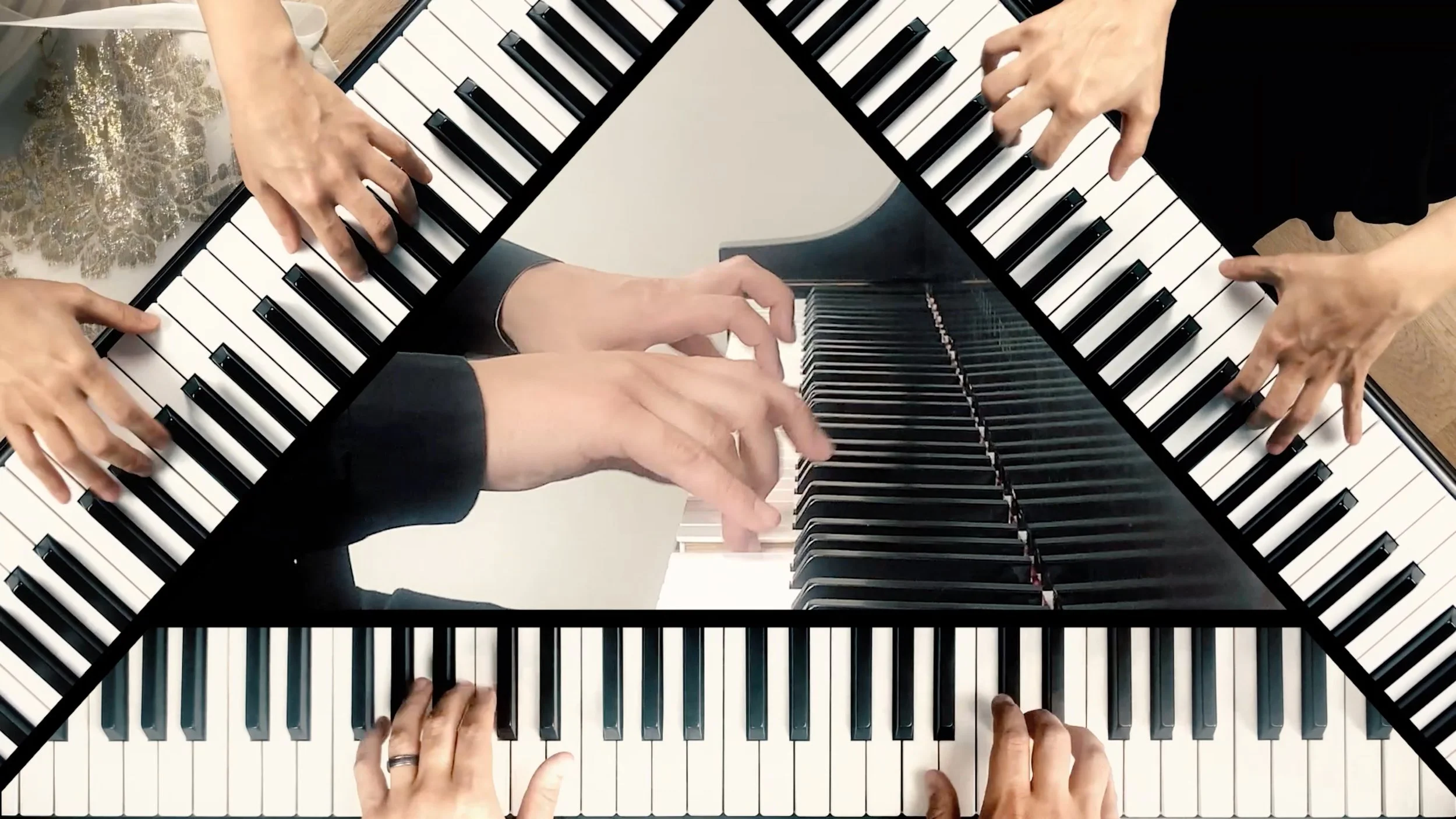
Vivaldi/Bach: Concerto for 4 Keyboards
Bach is known for making transcriptions of his own compositions, but he also arranged the compositions of other composers, including Antonio Vivaldi. This Concerto for Four Harpsichords (or pianos, in our modern-day version) is based on Vivaldi’s Concerto for four violins, from his Opus 3 L’estro armónico series of concertos for string instruments in various combinations, noted by Vivaldi scholar Michael Talbot as “perhaps the most influential collection of instrumental music to appear during the whole of the eighteenth century.” Bach adapted five concertos from this set in 1713-14 during his tenure in Weimar as court organist; nearly 20 years later he created this concerto—his sixth, final, and most ambitious adaptation of Vivaldi’s Op. 3 concerti. Bach reimagined Vivaldi’s composition in significant ways: not only did he change the instrumentation from four violins to four harpsichords, he altered the key from B minor to A minor, added his own distinctive keyboard-friendly flourishes of extra notes and chords, filled out the harmonies, and endowed the solo parts with greater complexity and clarity. One can imagine Bach’s excitement at having four independent harpsichord parts to play with; even further, one can envision a potential performance of this work being a family affair considering his musically talented progeny!
Just as Bach must have relished the possibilities of writing for four keyboards, we have discovered a similar measure of freedom and expansion through the capabilities of technology. Despite being isolated apart since March, we unearthed the opportunity to tackle projects we could never execute in a live concert setting. In this case, we perform the first movement of Bach’s virtuosic concerto by each taking on two keyboard parts (Greg on Keyboards 1 & 4, Elizabeth on Keyboards 2 & 3) and combining them in a music video of diametric interplay.